







Quick answer: Citation tracking is most useful when citations can be linked to a specific question, source URL and buying stage.
This guide addresses ai citation tracking tools from the perspective of a reader who needs a decision, not just a definition. It sets out four criteria, an example, a simple self-assessment and the sources worth reviewing. The decision framework is editorial guidance; it is not a proprietary benchmark or a substitute for professional judgment.
The essentials: what really matters
The relevant unit of analysis is a repeatable task with observable inputs and outputs. Before evaluating vendors or approaches, write down which decision a person is trying to make, what evidence that decision requires and which risks the system must not introduce. A confident-sounding answer without provenance is a failure for many business use cases.
At a glance
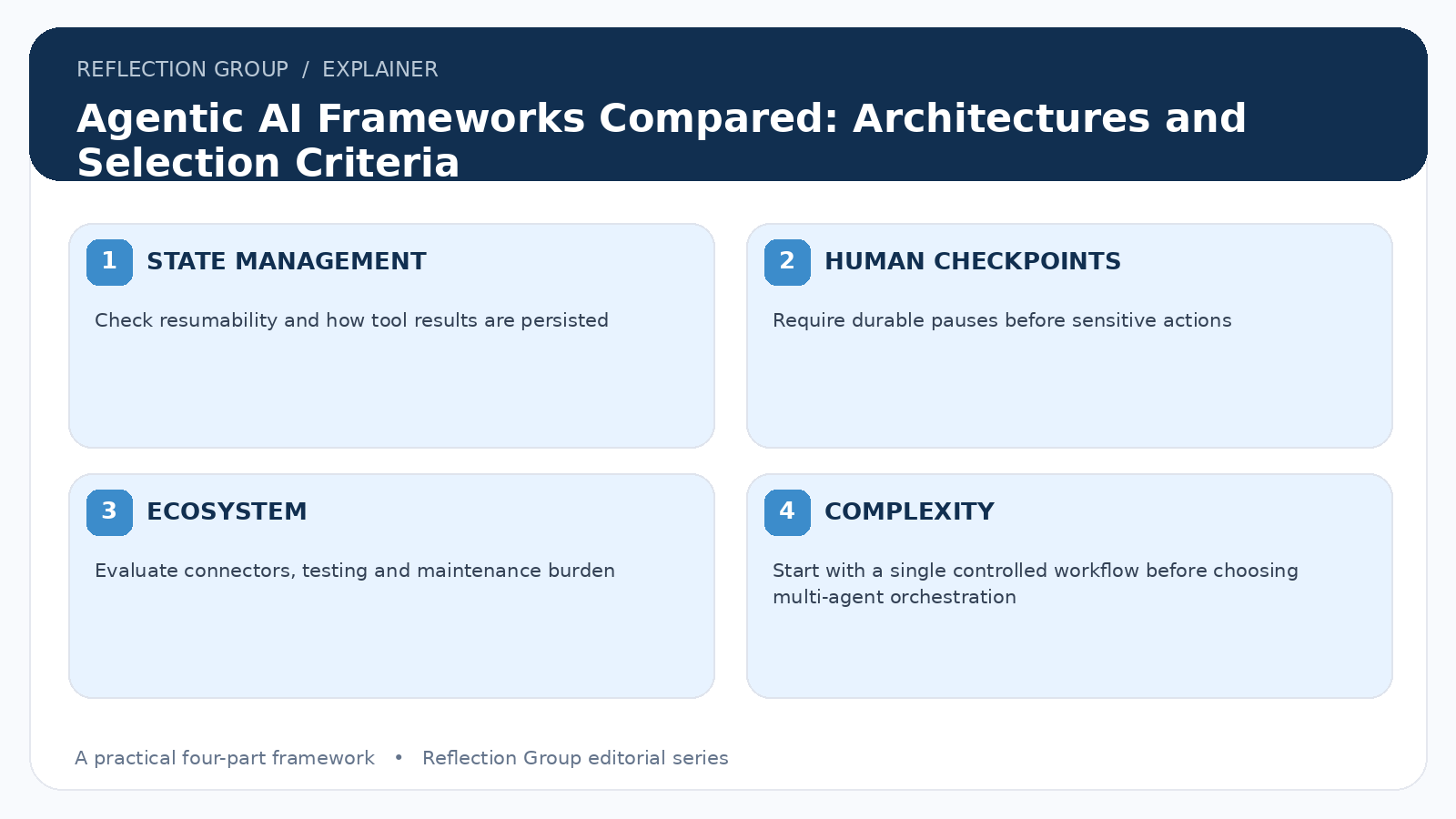
- Question set: Select informational, comparison and transactional questions independently
- Citation taxonomy: Separate direct source links, mentions without links and referred traffic
- Repeatability: Repeat queries over time and document model changes
- Actionability: Use missing citations to improve source clarity and original evidence
Start with a consistent prompt sample rather than a one-off screenshot; the AI visibility tool selection comparison explains the reporting requirements.
The four-part evaluation framework
1. Question set
Select informational, comparison and transactional questions independently. The first practical action is to request one concrete example relevant to your own situation. Ask who produced it, when it was checked and what would make it invalid. Do not accept a broad assurance where a record, document, calculation or observed process can settle the question more reliably.
For ai citation tracking tools, define an evidence standard for question set. A useful record identifies the owner, the supporting source and any open exception. If the information is missing, mark the criterion as unverified rather than assuming success. This distinction helps prevent a polished presentation from being mistaken for a tested outcome.
2. Citation taxonomy
Separate direct source links, mentions without links and referred traffic. The first practical action is to request one concrete example relevant to your own situation. Ask who produced it, when it was checked and what would make it invalid. Do not accept a broad assurance where a record, document, calculation or observed process can settle the question more reliably.
For ai citation tracking tools, define an evidence standard for citation taxonomy. A useful record identifies the owner, the supporting source and any open exception. If the information is missing, mark the criterion as unverified rather than assuming success. This distinction helps prevent a polished presentation from being mistaken for a tested outcome.
3. Repeatability
Repeat queries over time and document model changes. The first practical action is to request one concrete example relevant to your own situation. Ask who produced it, when it was checked and what would make it invalid. Do not accept a broad assurance where a record, document, calculation or observed process can settle the question more reliably.
For ai citation tracking tools, define an evidence standard for repeatability. A useful record identifies the owner, the supporting source and any open exception. If the information is missing, mark the criterion as unverified rather than assuming success. This distinction helps prevent a polished presentation from being mistaken for a tested outcome.
4. Actionability
Use missing citations to improve source clarity and original evidence. The first practical action is to request one concrete example relevant to your own situation. Ask who produced it, when it was checked and what would make it invalid. Do not accept a broad assurance where a record, document, calculation or observed process can settle the question more reliably.
For ai citation tracking tools, define an evidence standard for actionability. A useful record identifies the owner, the supporting source and any open exception. If the information is missing, mark the criterion as unverified rather than assuming success. This distinction helps prevent a polished presentation from being mistaken for a tested outcome.
To distinguish a useful citation from a misleading response, see the methodology in LLM evaluation metrics.
For a complementary earlier perspective, read the earlier LLM share-of-voice measurement guide.
One-page comparison table
| Criterion | Evidence to request | Decision signal |
|---|---|---|
| Question set | Sample output or trace | Select informational, comparison and transactional questions independently |
| Citation taxonomy | Sample output or trace | Separate direct source links, mentions without links and referred traffic |
| Repeatability | Sample output or trace | Repeat queries over time and document model changes |
| Actionability | Sample output or trace | Use missing citations to improve source clarity and original evidence |
Illustrated decision framework

Original Reflection Group diagram. The four stages are a practical editorial framework, not a certification or clinical scoring standard.
Interactive decision helper
Use the tool below to organize your own situation. Its output is illustrative and is deliberately not presented as legal, health or financial advice. A low score means more verification is needed, not that the option is automatically wrong.
Four-point decision scorecard
Check each area only after you have evidence relevant to your situation:
0 of 4 criteria verified
Editorial organization aid only; not a professional certification or risk score.Example: applying the framework
An article earns more citations for technical FAQs after adding reproducible methodology and a clearly sourced definition.
A meaningful comparison uses the same dataset, questions and review rubric for every option. Document model versions, timestamps and test conditions. Track exceptions, because an average score may conceal costly edge cases, privacy failures or downstream actions the reviewer would not approve.
In that example, the next step is to record which of the four criteria has persuasive evidence and which remains uncertain. That creates an actionable follow-up: obtain a missing record, change the scope, negotiate responsibility or seek a specialist assessment. It is more useful than declaring a universally best product or method.
Common mistake — and how to avoid it
A brand mention is not equivalent to a clickable citation or a customer visit. Treat any proposal or article as a starting hypothesis. Confirm the underlying conditions before transferring its conclusion to a different organization, country, health profile or bottle.
Start with a small baseline, collect examples of failure, then change one factor at a time. Human review is useful where stakes are material, but only if reviewers have clear criteria and enough information to challenge an output. Governance is a process with a named owner, not a one-time launch meeting.
Next steps: a practical checklist
- Write down the particular decision behind your search for ai citation tracking tools.
- Check question set with documented evidence, not an assumption.
- Check citation taxonomy with documented evidence, not an assumption.
- Check repeatability with documented evidence, not an assumption.
- Check actionability with documented evidence, not an assumption.
- Compare at least two realistic alternatives using the same evaluation conditions.
- Capture outstanding uncertainties and schedule a review before making an irreversible decision.
Frequently asked questions
What counts as a citation in an AI answer?
A citation is a visible reference or source link associated with an AI-generated answer. A brand mention without a link is a different metric, and a citation does not necessarily indicate that the cited page was the model’s sole source.
How can citation tracking be made reproducible?
Freeze a representative prompt set, record the date and market, save cited URLs and answer screenshots, and repeat the same checks. Keep linked citations, unlinked mentions and competitor citations in separate columns.
Reliable references and further reading
These primary or specialist sources provide context for checking the relevant concepts. Their existence does not mean they endorse this article or its editorial scoring framework.
- Google Search Console
- NIST AI Risk Management Framework